Three things make the Zaanse Schans work with children, and two things make it fail. Both lists are short and both are worth having before you book anything.
It works because it is free, because the two best things to watch are demonstrations rather than displays, and because it is flat and compact. It fails when somebody puts a six-year-old on a ten-hour coach day, and it fails on the mill stairs.
Is it worth it with children? Yes, and cheaply
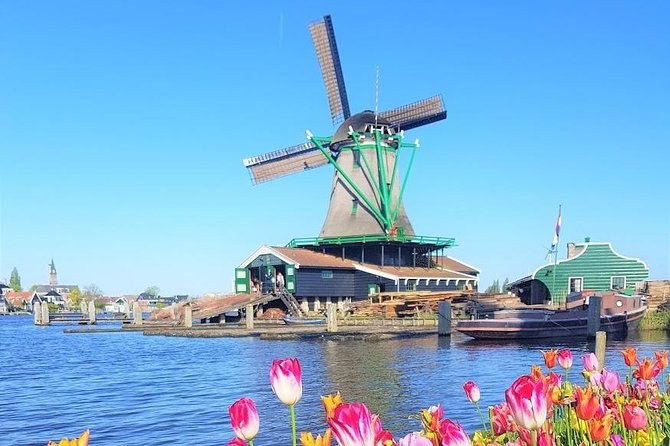
The Zaanse Schans is a freely accessible heritage village. There is no gate, no admission ticket and no entry fee — you walk in off the road and the windmill panorama costs nothing. A family of four walks in for nothing. The Catharina Hoeve cheese demonstration is free and involves tasting. The clog workshop is free and involves a man turning a block of wood into a shoe in about four minutes with a machine that looks alarming. Both hold a child’s attention better than a museum case does.
And bus 800 from Amsterdam Central takes about 24 minutes, runs every 15 minutes between 09:00 and 17:00, and children up to and including eleven travel free. That is a day out for the price of two adult bus fares.
What children actually like here
- The clog workshop — the carving machine, the wall of painted clogs, and the giant yellow clogs outside that everybody photographs their children in.
- The cheese farm — free tasting, and cheesemakers in costume who are used to children.
- Climbing a mill — if they are old enough. Standing on the outside stage of De Kat with the sails going over your head is the memory.
- The animals — there are goats and sheep in the meadows behind the dike, which several reviews mention before they mention the windmills.
- The Verkade Experience — a chocolate and biscuit factory floor with the original machinery still running.
What to prepare for
What catches families out at the Zaanse Schans
| The problem | How bad | What to do |
|---|---|---|
| Mill stairs | Steep, narrow, closer to a ladder. No lifts | Under-fives: skip the climb. Older: fine, one adult in front |
| Toilets | €1 a visit, cards only, no cash | Carry a card. Go before you leave Amsterdam |
| No luggage storage | None at all on the site | Do not come straight from a hotel checkout |
| Wind on the dike | No shelter for six hundred metres | Coats, not umbrellas |
| Cycling | Bikes on the Kalverringdijk, not in the lanes | Watch when you step back for a photograph |
| Lunch | Almost no tour includes it | The pancake restaurant, or bring it |
Pushchairs and wheelchairs
A pushchair is fine on the flat: the paths are gravel and brick, there are step-free bridges, and there are accessible toilets at the De Bezem building and at the Zaans Museum. It is not fine inside a mill, and nobody expects it to be.
Several of the guided minibuses state that they are stroller accessible, which mostly means the pushchair fits in the vehicle. For a wheelchair the picture is thinner: of all the mills only Het Jonge Schaap is accessible, and none of the tours here is sold as wheelchair accessible. Visitor information has the detail.
Which tour suits a family
The honest answer is the shortest one you can find, or none at all.
If you want a guide, the small-group half-days are the shape that works: three and a half hours door to door, capped at sixteen, and two and a half of those hours on the ground. The private days are the other answer, because they bend to your timetable and several carry infant seats.
Zaanse Schans tours from Amsterdam state their own duration and their own cap on every card, which is the pair of numbers that matters most here.
How long to allow
Ninety minutes is plenty with young children and about right with older ones. Two hours lets you add a mill or the Verkade Experience without anybody flagging. Beyond that you are relying on the meadows and the shops, which is fine on a sunny day and thin on a wet one.
The map page sets out what each stretch of time reaches, and the calendar page makes the case for arriving before eleven — with children, an empty dike is worth more than an extra hour.
A ninety-minute plan that works
Get off the bus, turn left along the Zeilenmakerspad and do the cheese farm first — children arrive hungry and the tasting is free. Then the clog workshop on the Kraaienest, which is the twenty minutes they will remember. Then the dike, as far as De Kat and back.
That is two demonstrations, the whole mill row and a windmill climb if they are old enough, inside ninety minutes, with one paid ticket in the whole outing. Do it in the other order and you will be dragging a hungry child past a cheese farm at the end.
Older children, and what changes
From about eight upwards the mills stop being scenery. The stairs are manageable, the machinery inside De Kat is genuinely loud and strange, and the fact that it has been grinding paint since 1664 lands. The windmills page is worth five minutes on the bus so they arrive knowing which is which.
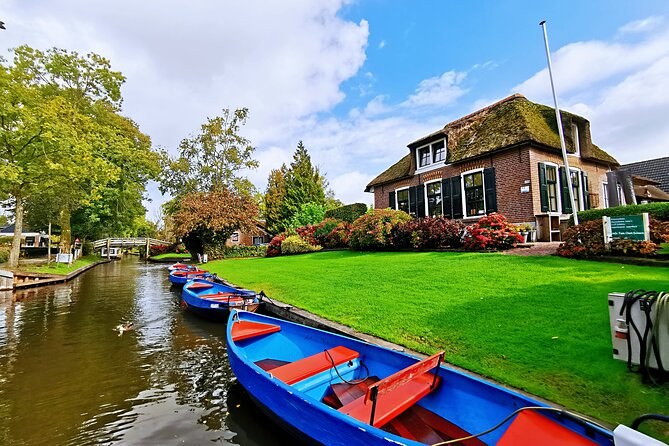
Teenagers do better on the longer days. The Giethoorn tours add a village with canals instead of roads and an hour in an open boat, which is a real day out rather than an extended stop. Those are the ten-hour options, and at that age the coach time is survivable.
What to combine it with
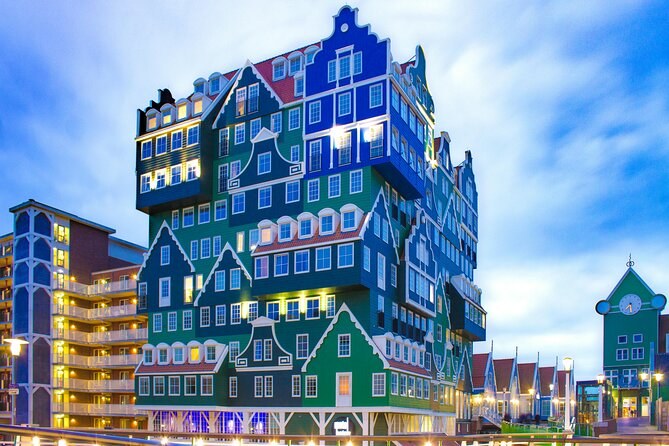
Zaandam is ten minutes away and has the Inntel hotel, a tower built out of stacked green Zaan house fronts that looks like a Lego model and is on the route of four of the tours here. If you have a full day and older children, Giethoorn adds a boat ride through a village with no roads. For younger ones, the windmills and the bus home is a complete day.
Going with children changes which day you want, not whether the place is worth it. Zaanse Schans Tours lists every option with its duration and its group cap.